
𝐀 𝐍𝐞𝐰 𝐒𝐨𝐜𝐢𝐚𝐥 𝐂𝐨𝐧𝐭𝐫𝐚𝐜𝐭 𝐈𝐬 𝐍𝐞𝐞𝐝𝐞𝐝 𝐈𝐧 𝐓𝐡𝐞 𝐀𝐠𝐞 𝐨𝐟 𝐀𝐈
5/9/20262 min read
The social contract was not built on philosophy alone. It was built on employment.
Healthcare tied to a job. Retirement earned through a company. Unemployment insurance triggered by a layoff. Much of the twentieth-century safety net rested on one assumption: most working-age adults would spend most of their lives as employees.
That assumption is dissolving — not through one dramatic rupture, but through a thousand quiet substitutions. A procurement agent replaces a coordinator. An analytics platform absorbs a compliance team. No mass layoff. No obvious crisis. Headcount drifts downward while output holds steady, and the institutions designed to catch people never trigger.
Some will tell you not to worry. That every technological revolution created more jobs than it destroyed.
They may be right about the destination. They are wrong to ignore the journey.
The mechanized loom was ultimately net-positive: more wealth, more output, more opportunity. Eventually. It also triggered the Luddite revolts. Fourteen thousand British troops deployed. Mills burned. Workers killed, imprisoned, or deported. The technology was not the problem. The transition was.
AI is compressing a similar transition from decades into years.
If displacement accelerates in 2027 and new jobs arrive in 2032, the economic thesis may be vindicated, while the political damage is already done. The US spends 0.1% of GDP on active labor market policies. The OECD average is 0.6%. Both too low for the pace of what is coming.
The deeper problem is not the number of jobs. It is the structure of work.
A gig worker replacing a displaced coordinator may look acceptable in statistics. They do not look identical in access to healthcare, retirement, or unemployment protection. Even a flat employment rate can hide a fraying social contract.
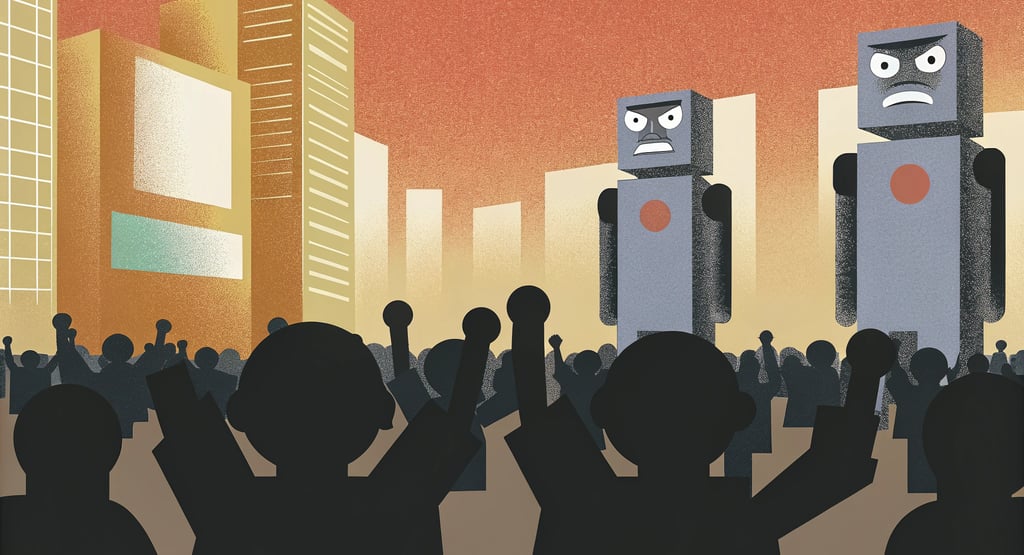
And people who fall through nets do not become passive. They become angry. They find politicians willing to give them an answer, however wrong.
That is the real risk: not that AI fails, but that AI succeeds economically while failing institutionally, captured by the backlash it provokes, regulated into stagnation, derailed by the instability created on the way to abundance.
The next social contract cannot depend on everyone having a traditional employer. It has to make security portable: healthcare, benefits, retraining, wage insurance, and transition support that follow the worker, not the job.
AI does not just challenge how we work. It challenges where economic security comes from. That must be addressed. Fast.
#AI #FutureOfWork #Leadership #SocialPolicy #SocialContract
Contact
bruno.gentil@sherpaconsultingasia.com
© 2026. All rights reserved.