
Agentic AI in Retail: How to Manage Disintermediation ?
Are brands ready for an Agentic AI world ?
1/21/20261 min read
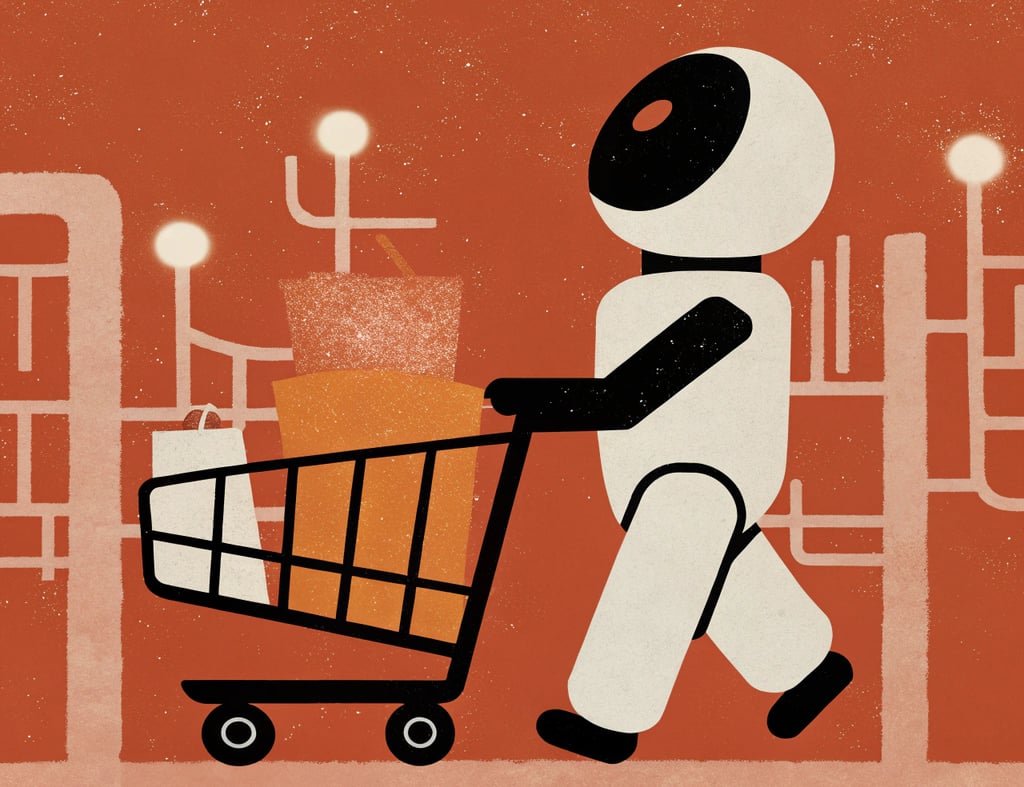
DISINTERMEDIATION IS COMING: ARE BRANDS READY FOR AGENTIC AI ?
Agentic AI has been the talk of the town. How will it impact shopping and what does it mean for brands ?
Agentic AI won’t “replace shopping.”
It will separate shopping into two different jobs:
1. Tasks that disappear into delegation
Repetitive. Low-identity. Time-sensitive. Regret-minimizing.
Think: restocks, utilities, office supplies, routine groceries.
2. Purchases that become more human
Identity signaling. Taste formation. Learning. Social meaning.
Think: fashion, beauty, design, food experiences, luxury, travel, art.
That’s the real design problem: the agency boundary.
Not “AI vs. humans,” but when do I want control vs. when do I want to delegate?
And here’s the trap:
If an agent only optimizes based on my past, it can quietly lock me into a taste rut.
So the winning experience needs intentional surprise:
· bounded (“surprise me… within these constraints”)
· reversible risk (easy returns / try-before-you-buy)
· visible learning (“here’s what I inferred—and you can edit it”)
One more shift I don’t think enough brands are pricing in:
As agents mediate more touchpoints, brands risk disintermediation—from feedback, emotion, and early weak signals.
Which is why I believe physical retail will become less transactional and more existential:
· taste formation
· social proof / shared discovery
· embodied trust
· narrative creation (memory beats efficiency)
My simplest framework: the Delegation Gradient
Agentic AI eats the task. Humans keep the meaning.
Where do you think retail gets fully agentic first—and where will humans stay the point?
hashtag#AgenticAI hashtag#CustomerExperience hashtag#RetailTech hashtag#BrandStrategy hashtag#PhysicalRetai
Contact
bruno.gentil@sherpaconsultingasia.com
© 2026. All rights reserved.