
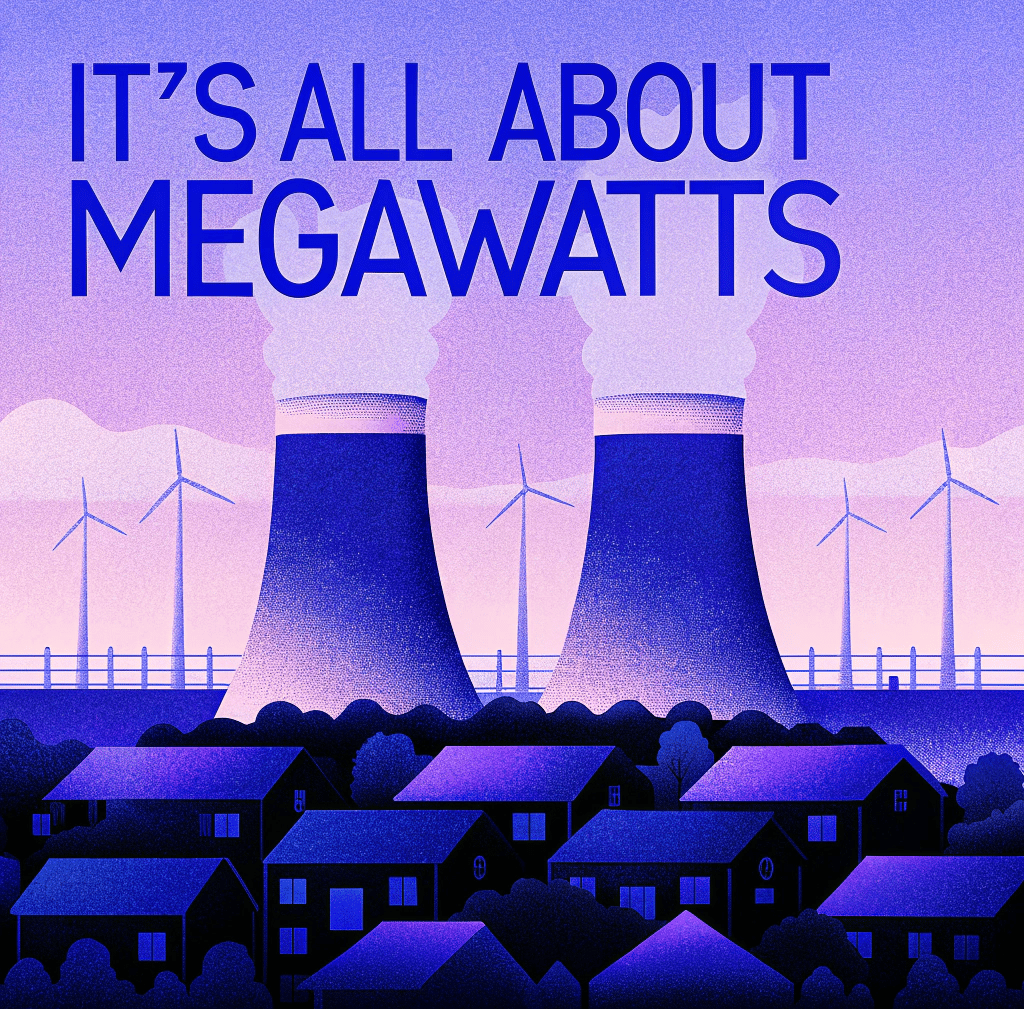
AI. It's All About MEGAWATTS
4/12/20261 min read
We spent 30 years building a borderless digital economy.
AI just put borders back on it.
Physical borders. Power lines. Water rights. Permitting queues. Land.
The Convergence Outlook 2026 from Future Today Strategy Group makes a point every business leader should take seriously: computational capacity is now geographically constrained, just like oil and steel in the last century. Intelligence depends on physical resources. Whoever controls those resources controls the pace of the AI economy.
This is no longer about chips or algorithms.
It’s about megawatts.
A single large AI data center needs 100 to 500 megawatts of steady power, the same as a small city. In the US, building the high-voltage lines to deliver that power takes 10 to 12 years on average, slowed by permitting and local opposition. Data centers cannot wait.
China takes a different approach. Beijing treats power infrastructure as a national priority and builds first. In 2025 alone, it added more than 430 GW of new solar and wind capacity, a record high that brought its total renewables close to 2 terawatts. It is also expanding nuclear power at unmatched speed: more than half of all nuclear reactors under construction worldwide are in China, with approvals for ten new units in 2025 and a clear path to 70 operational reactors by the end of 2026. Grid and transmission projects move in months, not decades.
The contrast is clear.
The US is racing to scale AI infrastructure while wrestling with power shortages, long approval timelines, and a tight labor market for builders.
China is simply building. Fast.
Power has gone physical again.
The race isn’t being won in the cloud. It’s being won in the dirt.
#AIInfrastructure #Geopolitics #China #EnergyStrategy #Trends2026
Contact
bruno.gentil@sherpaconsultingasia.com
© 2026. All rights reserved.