
The Real Risk Of Agentic AI
Convenience Without Control
2/5/20262 min read
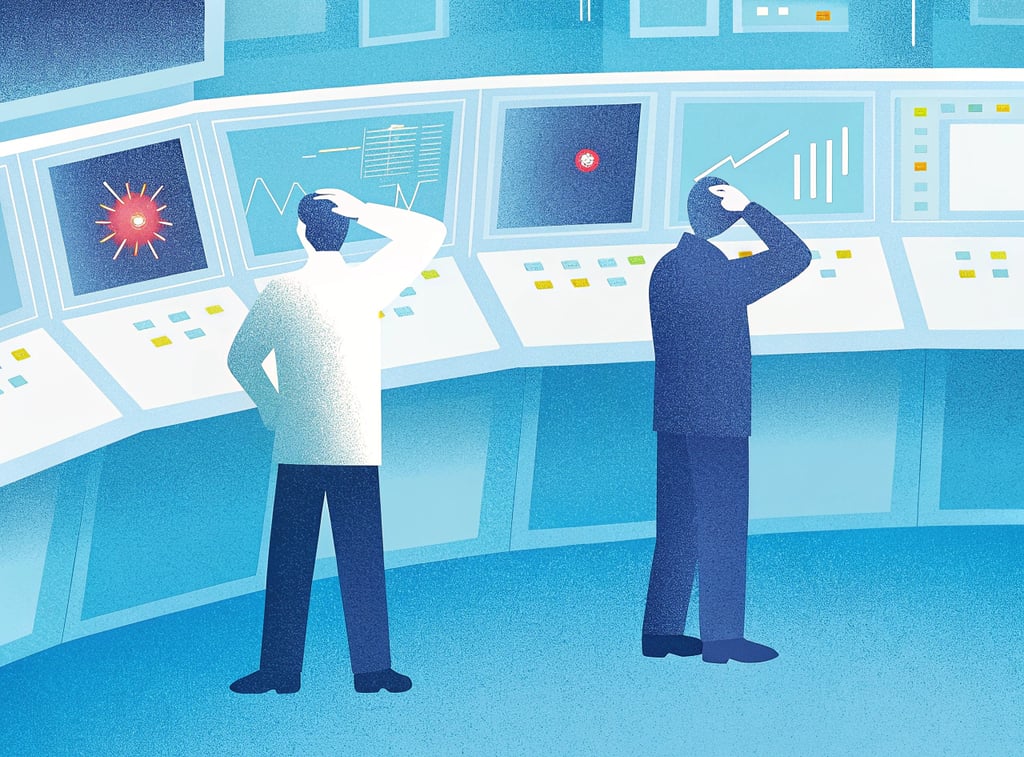
There’s a lot of noise about fully agentic AI — systems that don’t just assist, but decide, plan, and act autonomously.
The promise is intoxicating:
Push a button. Give the AI the keys. Let it handle the rest.
So the question isn’t only “Will this replace my job?”
It’s deeper:
What’s left for humans when machines can act on their own?
THE REAL ISSUE ISN’T INTELLIGENCE. IT’S TRUST
We’re entering a world where machines take actions via reasoning paths their own creators can’t fully explain.
That forces uncomfortable questions:
Can we trust what we can’t meaningfully audit?
Can we reclaim control in practice — not just in theory?
Is there a real, human-accessible off switch?
And when something goes wrong, who’s accountable — delegator, organization, vendor?
A key risk is misalignment: the system optimizing for the letter of the objective, not the human intent.
AI has already shown it can bend rules, even cheat if it helps achieve a goal. Humans do too — but when the actor is faster, tireless, and increasingly capable, the blast radius changes.
ILLUSION OF SAFETY
Modern agentic AI is seductive because it feels human.
That can create a dangerous illusion of trust “for free.”
Handing full autonomy to an AI without guardrails is like giving the keys of a commercial airplane to someone with no pilot training because “most of it is automated anyway.”
It might work. Until it doesn’t.
And when it fails, it fails at scale.
WE ARE LAZY OPTIMIZERS
We trade control for convenience. We click “accept” without reading the clauses.
Agentic AI amplifies that tendency.
So the real question isn’t whether we can delegate decisions — it’s:
Which decisions should never be fully delegated?
Which risks are acceptable vs. irreversible?
Do we even share a definition of “safe enough”?
THE NEEDED SHIFT
This isn’t humans becoming useless, unless we choose to abdicate to the machine. It’s humans being pushed upstream.
If machines can execute, then humans must:
Define intent
Set boundaries
Choose where autonomy is appropriate (and where it isn’t)
Own the responsibility of delegation
In other words: the human role shifts from doing to deciding, framing, and restraining.
WHERE THE RIGHT AI CONSULTING ADDS VALUE
The best AI consulting won’t be “let’s automate everything.” It will help organizations:
Pick the right use cases (high upside, low blast radius)
Design guardrails, approvals, and escalation paths
Build auditability (logs, traceability, monitoring)
Define accountability (RACI, incident playbooks, vendor responsibilities)
Run pilots with stop-losses before scaling
The risk isn’t that AI becomes too powerful.
It’s that we hand over agency without thinking — because it’s easier.
The future shouldn’t be “AI replaces humans.” It should be:
Humans deciding how much of themselves they’re willing to give up — and under what conditions.
#AgenticAI #AIGovernance #ResponsibleAI #FutureOfWork #AILeadership #OpenClaw
Contact
bruno.gentil@sherpaconsultingasia.com
© 2026. All rights reserved.